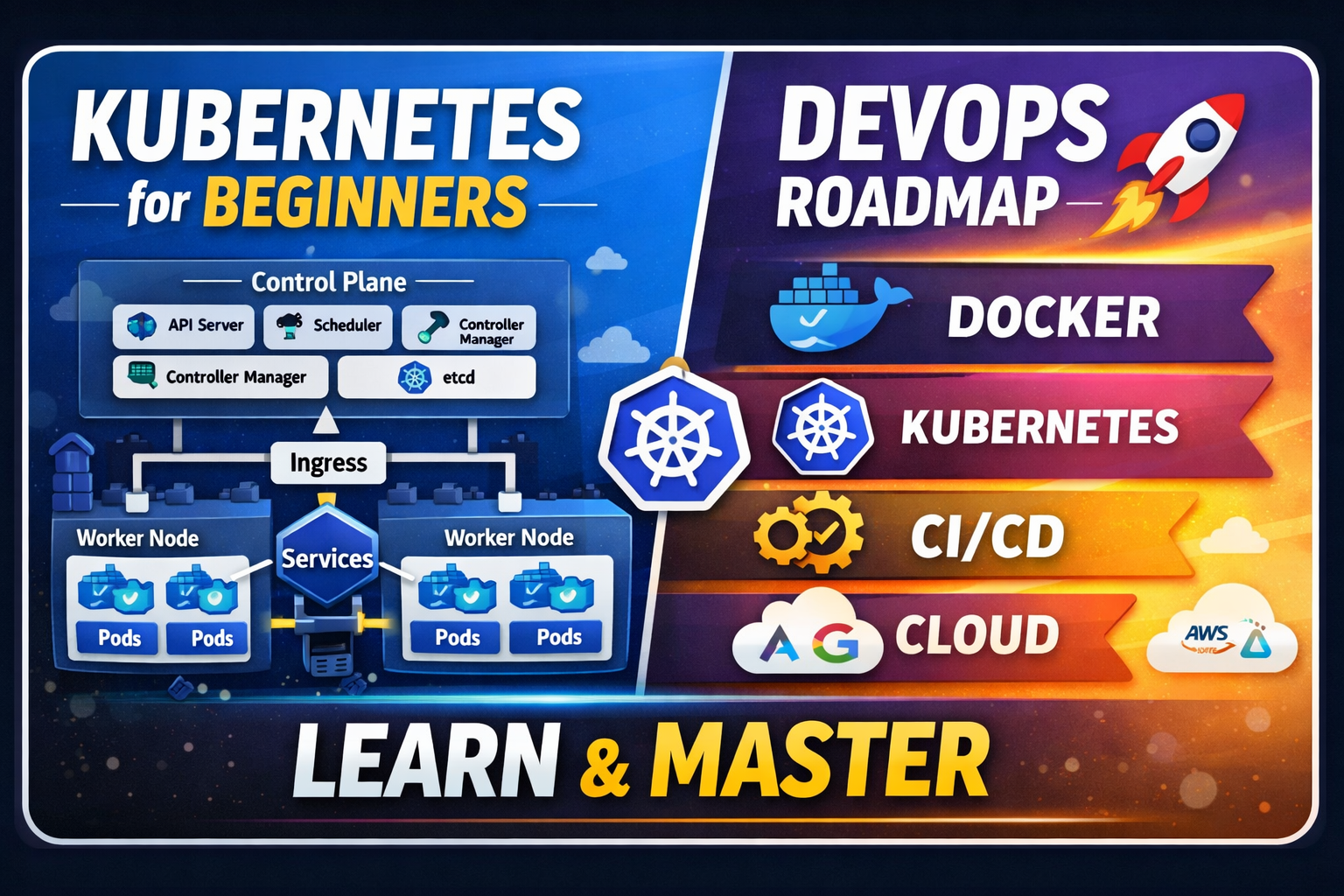

Modern applications like streaming platforms, banking apps, and large e-commerce systems run on infrastructure that must be reliable, scalable, and automated. Managing these systems manually across many servers would be extremely difficult. This is where Kubernetes becomes essential. Kubernetes is a system designed to automatically manage applications that run inside containers. Instead of developers manually starting servers, restarting failed applications, or scaling infrastructure during high traffic, Kubernetes does all of this automatically.

To understand Kubernetes, imagine running a food delivery company. You have hundreds of orders coming in, many kitchens preparing meals, and delivery drivers transporting them. Without a coordinator, the entire system would collapse. Kubernetes plays the role of that coordinator in modern software infrastructure. It ensures applications run properly, distributes workloads across servers, replaces failing components, and scales the system when demand increases.
Before Kubernetes can be understood fully, it is important to understand containers. Containers package an application together with everything it needs to run, including libraries, dependencies, and runtime environments. This means the application behaves the same whether it runs on a developer’s laptop or in a large cloud data center. One of the most widely used container platforms is Docker, which allows developers to package and distribute software easily.
Think of a container like a meal box from a restaurant. Everything needed for the meal rice, chicken, sauce, and vegetables is already inside the box. When you open it anywhere, the meal is complete. Containers work exactly the same way for software.