
Modern applications like streaming platforms, banking apps, and large e-commerce systems run on infrastructure that must be reliable, scalable, and automated. Managing these systems manually across many servers would be extremely difficult. This is where Kubernetes becomes essential. Kubernetes is a system designed to automatically manage applications that run inside containers. Instead of developers manually starting servers, restarting failed applications, or scaling infrastructure during high traffic, Kubernetes does all of this automatically.

To understand Kubernetes, imagine running a food delivery company. You have hundreds of orders coming in, many kitchens preparing meals, and delivery drivers transporting them. Without a coordinator, the entire system would collapse. Kubernetes plays the role of that coordinator in modern software infrastructure. It ensures applications run properly, distributes workloads across servers, replaces failing components, and scales the system when demand increases.
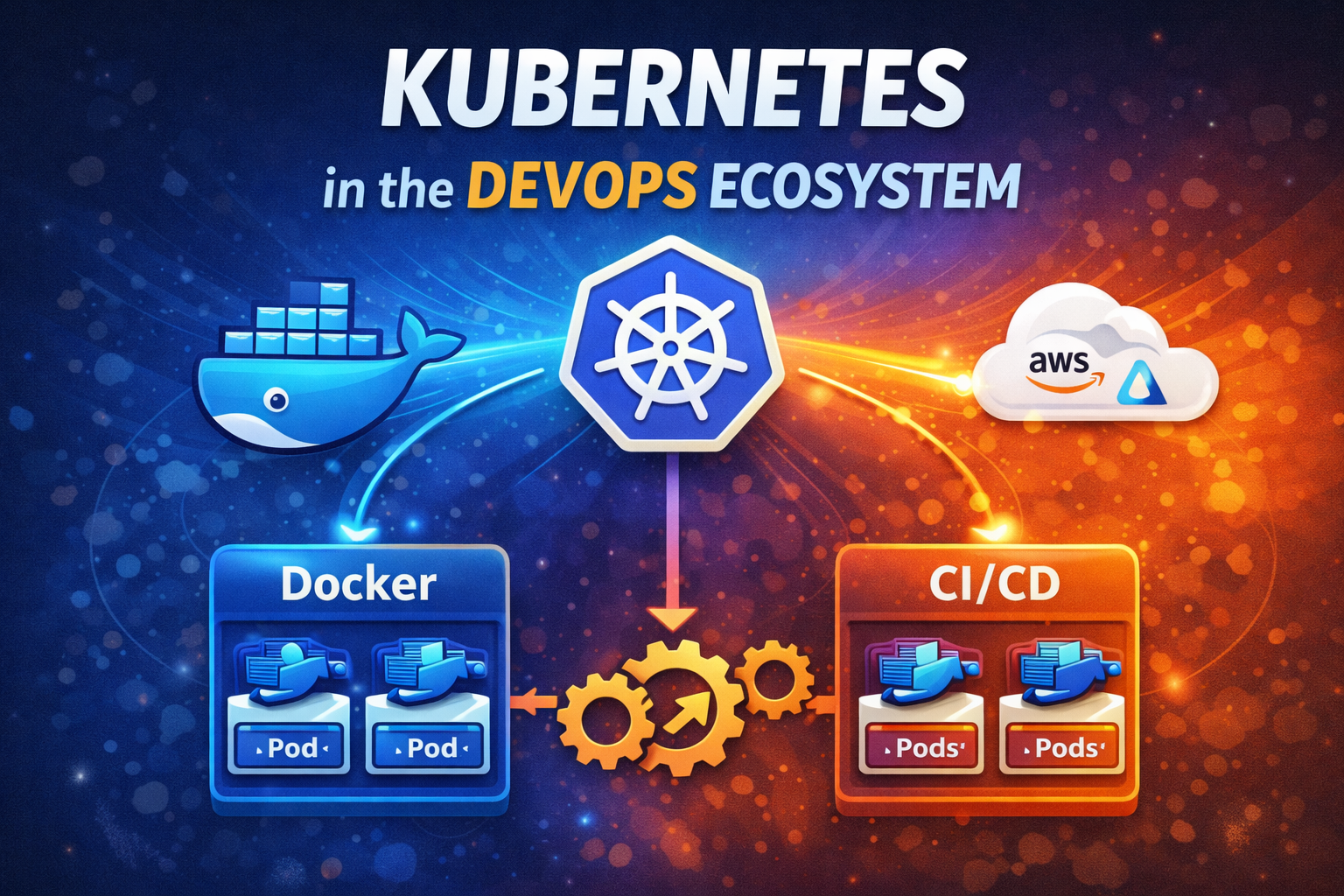
Before Kubernetes can be understood fully, it is important to understand containers. Containers package an application together with everything it needs to run, including libraries, dependencies, and runtime environments. This means the application behaves the same whether it runs on a developer’s laptop or in a large cloud data center. One of the most widely used container platforms is Docker, which allows developers to package and distribute software easily.
Think of a container like a meal box from a restaurant. Everything needed for the meal rice, chicken, sauce, and vegetables is already inside the box. When you open it anywhere, the meal is complete. Containers work exactly the same way for software.

Once applications are packaged in containers, Kubernetes organizes them into structures called pods. A pod is the smallest deployable unit in Kubernetes and usually contains one container. These pods run on machines called nodes. A collection of nodes working together forms a cluster.
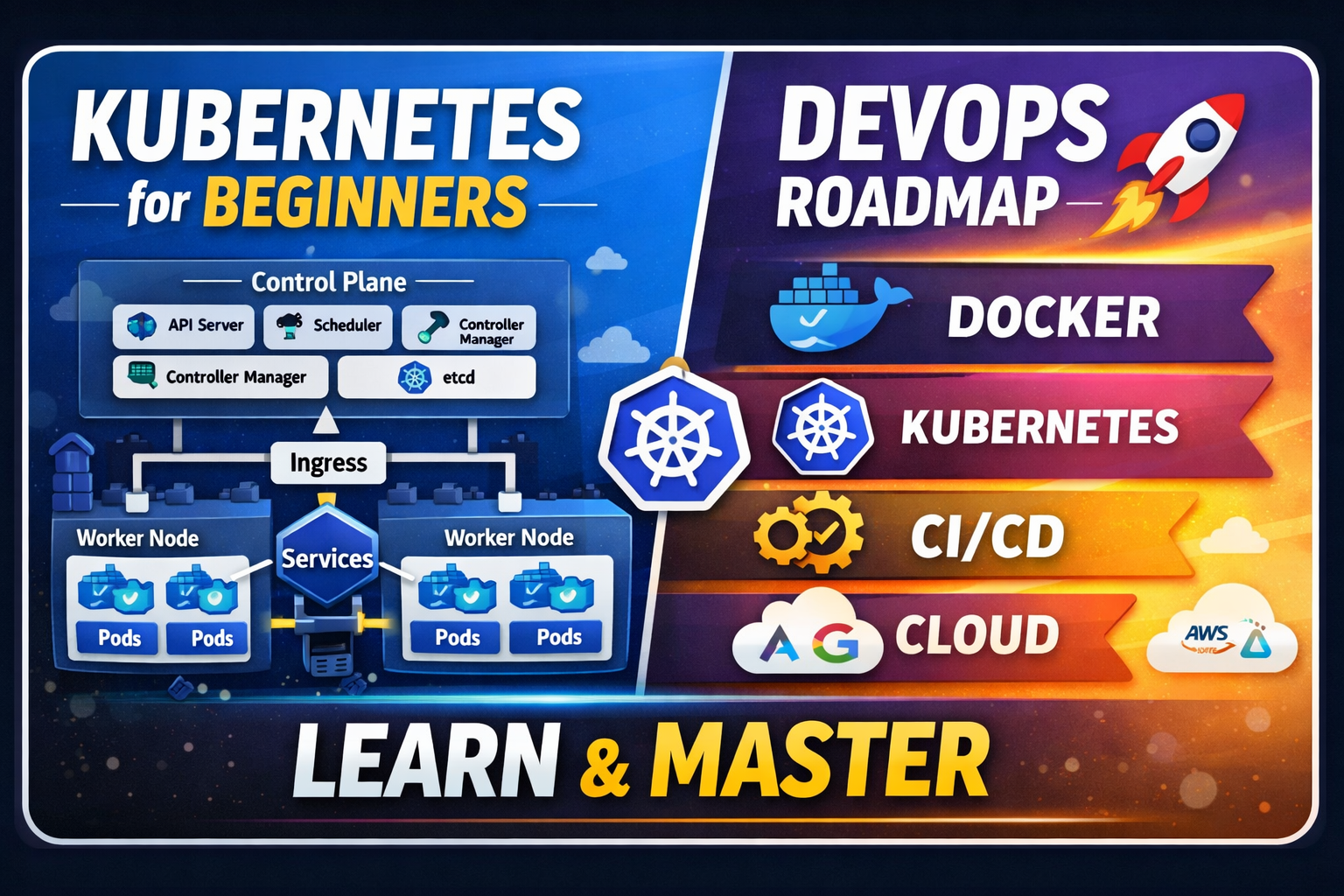
The architecture of Kubernetes consists of two major components: the control plane and the worker nodes. The control plane is the brain of the cluster and manages the overall system. It includes the API server, which acts as the entry point for commands; the scheduler, which decides where applications should run; the controller manager, which ensures the system matches its intended configuration; and etcd, a distributed database that stores cluster information.

Worker nodes are the machines that run the actual applications. Each node contains a component called kubelet, which communicates with the control plane, and a container runtime that runs containers. Pods live on worker nodes and execute application workloads.
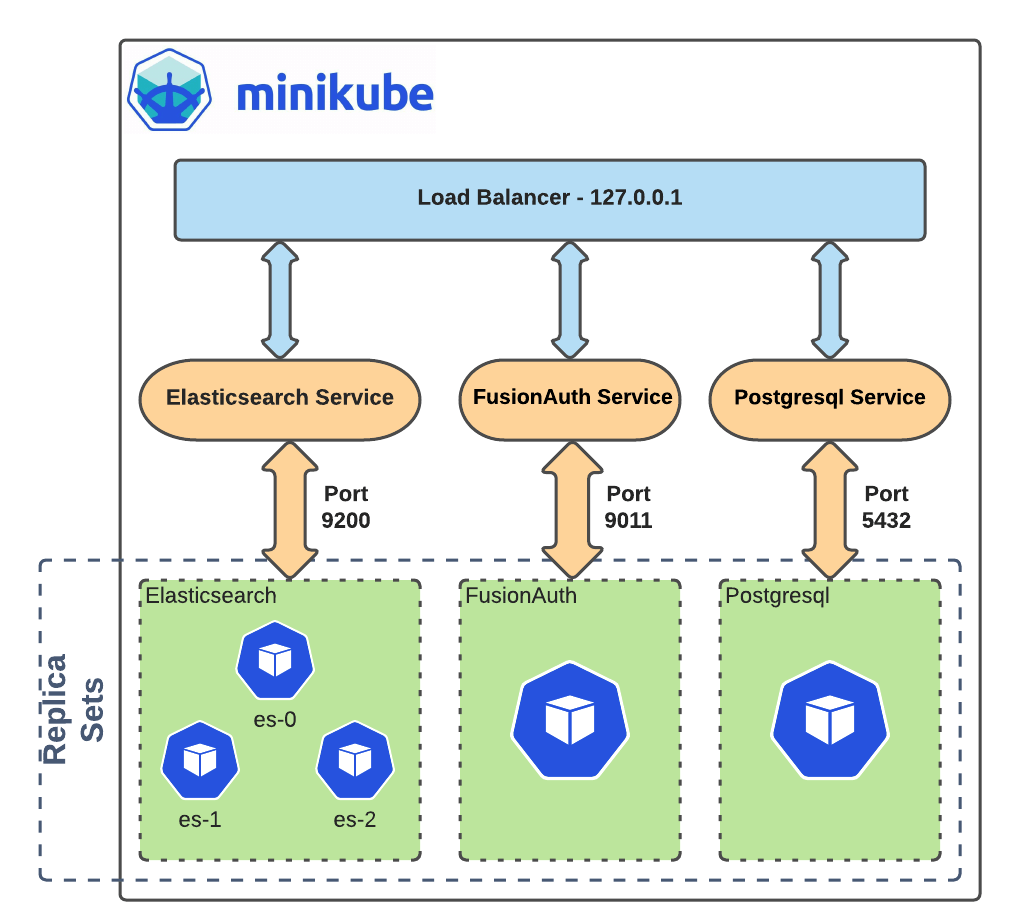
In a real system, the traffic flow typically looks like this: users access an application through a load balancer. The load balancer forwards traffic to an ingress controller, which directs requests to Kubernetes services. These services then distribute traffic to the appropriate pods running the application.
For example, imagine building a website using Python and Django. If the website runs on a single server and that server crashes, the entire application becomes unavailable. Kubernetes solves this problem by running multiple copies of the application across different nodes. If one instance fails, Kubernetes automatically creates another to replace it.
One of the most powerful features of Kubernetes is automatic scaling. Suppose your website suddenly goes viral and receives ten thousand users instead of one hundred. Instead of crashing under the load, Kubernetes automatically increases the number of running pods. When traffic decreases, it scales them back down, ensuring efficient resource usage.
Kubernetes also provides self-healing capabilities. The system continuously monitors the health of applications. If a pod crashes or becomes unresponsive, Kubernetes detects the problem and automatically launches a replacement pod. This ensures high availability without requiring manual intervention.
Large technology companies rely heavily on Kubernetes to power their platforms. Companies such as Google, Netflix, and Spotify use Kubernetes to run their services at global scale. Kubernetes was originally developed by engineers at Google based on years of experience running containerized infrastructure.



Leave A Comment
You must be logged in to leave a comment.