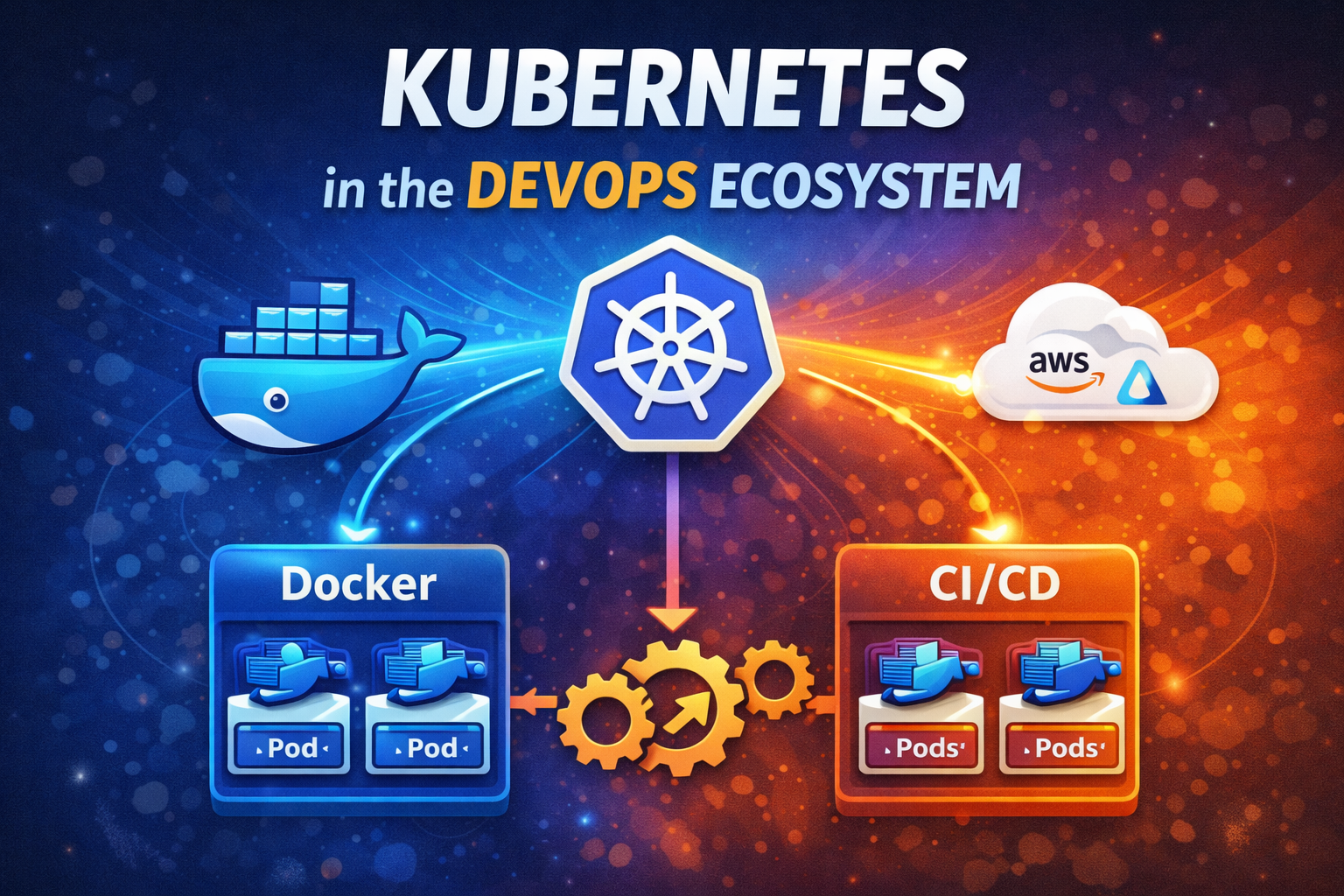

Kubernetes is only one part of the larger DevOps ecosystem. DevOps combines software development with operations practices to automate and improve application delivery. Engineers working with Kubernetes often use many additional tools.
The first stage of a DevOps journey usually involves learning programming and version control. Developers must understand tools like Git and operating systems such as Linux.
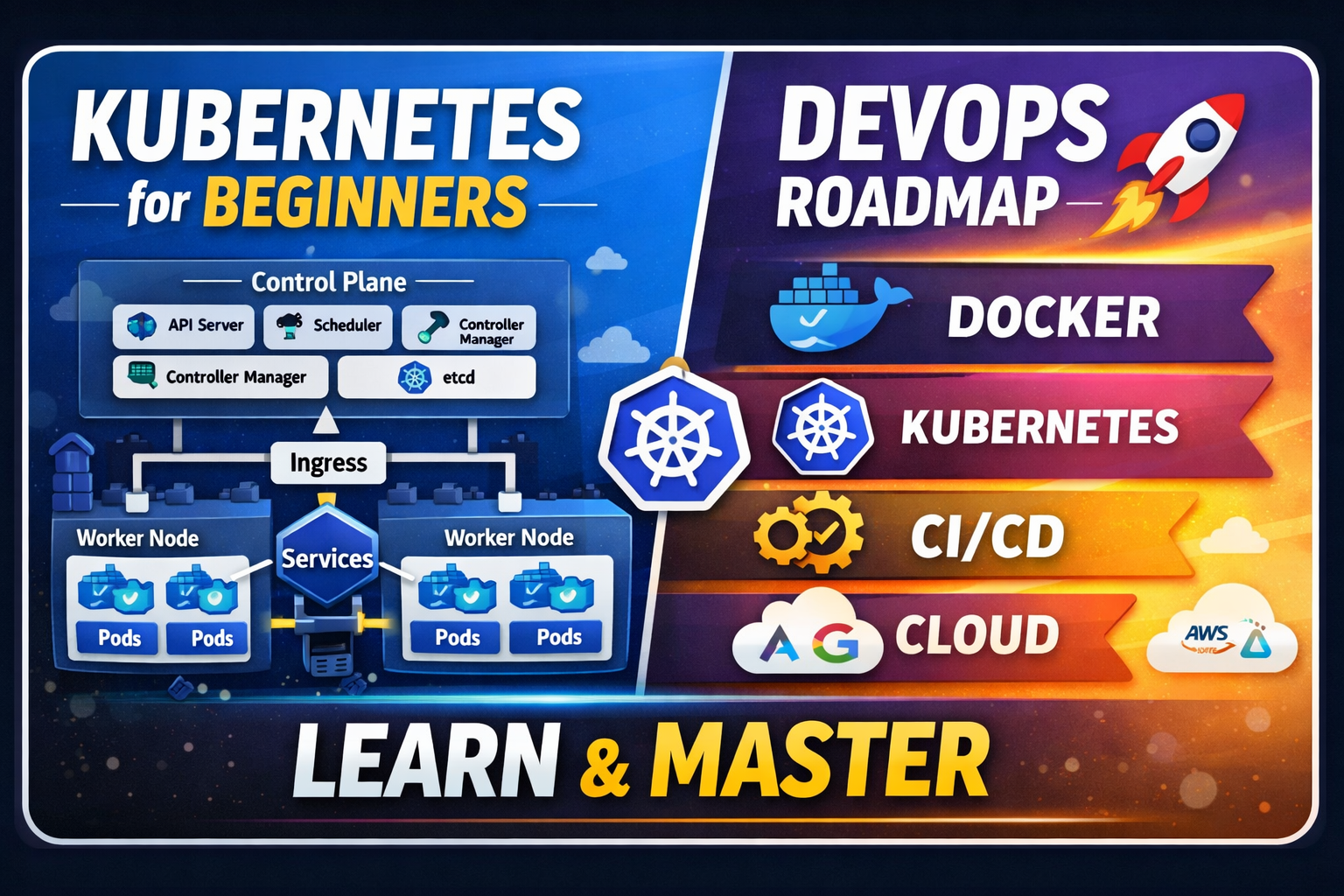
The next stage involves containerization, typically using Docker. Once developers understand containers, they move on to orchestration with Kubernetes. Kubernetes allows containers to run reliably across clusters of machines.
After mastering Kubernetes, engineers typically learn CI/CD automation. Continuous integration and continuous deployment pipelines automate testing and deployment. Tools like Jenkins and GitHub Actions are commonly used to build these pipelines.
Infrastructure as Code is another essential skill. Instead of manually configuring servers, engineers define infrastructure using code. Tools such as Terraform and Ansible help automate cloud infrastructure.
Finally, modern DevOps engineers work extensively with cloud platforms. Popular platforms include Amazon Web Services, Microsoft Azure, and Google Cloud, all of which offer managed Kubernetes services.
Why Learning Kubernetes Matters
Kubernetes has become one of the most important technologies in cloud computing and DevOps. Organizations need systems that can scale automatically, recover from failures, and deploy software quickly. Kubernetes provides these capabilities while simplifying infrastructure management.
For developers, learning Kubernetes opens doors to careers in DevOps engineering, cloud architecture, and platform engineering. The demand for engineers who understand Kubernetes continues to grow as more companies move toward cloud-native infrastructure.
In simple terms, Kubernetes allows developers to build applications that are resilient, scalable, and production-ready. Understanding how Kubernetes works is a major step toward mastering modern software infrastructure.





Leave A Comment
You must be logged in to leave a comment.