
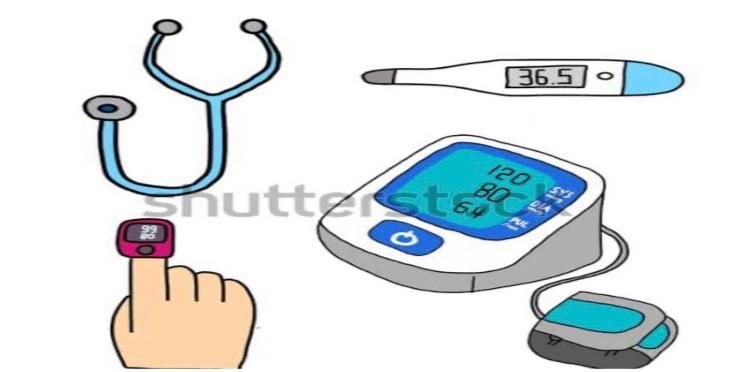
Vital Signs are objective measurements used to assess the body's essential physiological functions and determine a person's health status.
Types; Body Temperature, Pulse, Respiration, Blood Pressure And Saturation.
Temperature-measures the body's ability to produce and lose heat. Normal range; 36.5 degrees celsius-37.5 degrees celsius. Common sites- Oral, Axillary, Rectal, Ear And Temporal artery
Factors Affecting it includes; Age, Exercise, Time of day, Hormonal changes Environmental temperature And Illness.
Pulse- is the rhythmic expansion of an artery caused by the heart pumping blood. Normal adult ranges: 60-100 beats per min. Common pulse sites; Radial, Carotid, Brachial, Femoral, Apical, Posterior pedis etc.
Pulse assessment includes; Rate, Volume, Rhythm
Respiration rate- which is the number of breaths taken in one minutes. Normal range; 12-20 breaths per minute.
Assessment include; Effot, Depth, Rhythm And Rate Factor Affecting Respiration Include; Exercise, Fever, Pain, Aniety
Blood Pressure-the force exerted by circulating blood against the walls of arteries. We have Systolic Pressure and Diastolic Pressure.
What's oxygen saturation? Measures the percentage of oxygen carried by hemoglobin in the blood. Uses pulse oximeter for its measurements.
Equipement Used Are;
- Thermometer
- Stethoscope
- Sphygmomanometer
- Watch with a second hand
- Pulse oximeter
These are the importances
- Assess a patient's general health.
- Detect early signs of illness or deterioration
- Establish baseline health data.
- Guide clinical decision-making.
- Assist in diagnosing medical conditions
Some nursing responsibilities;
- Measure vital signs accurately.
- Follow standard procedures and infection prevention practices.
- Record findings correctly.
- Compare results with normal values.
- Report abnormal findings promptly.
- Reassess when necessary.
- Educate patients about factors that influence vital signs
Advantages of monitoring it includes;
- Provides objective clinical data.
- Helps evaluate treatment effectiveness.
- Improves patient safety.
- Supports timely treatment and interventions.
- Enables early detection of health problems.
These are some challenges;
- Environmental distractions
- Uncooperative or anxious patients
- Faulty or poorly calibrated equipment
- Incorrect technique can produce inaccurate readings.
- Failure to document or interpret findings correctly.
Vital Signs are fundamental indicators of health and are essential in patient assessment. Accurate measurement and interpretation of temperature, pulse, respirstion, blood pressure, pain, and oxygen saturation enable healthcare professionals to identify abnormalities early, monitor patient progress, and provides safe, effective, and timely care.





Comments