

Most people who start learning a new skill hit the same wall around the second or third week. The excitement fades, the confusion stays, and a quiet voice asks whether you are really cut out for this.
If that voice sounds familiar, this post is for you. Across one week at CodeDevPay Academy, we sent learners three short messages on exactly this struggle. Together they make a simple case: learning is slower and messier than it looks from the outside, and that does not mean you are failing. Here are the three ideas, expanded.
1. Remember your progress as clearly as your mistakes
Most of us keep a very detailed record of everything that went wrong. The failed interview, the broken code, the formula that returned an error in front of the whole class. We replay these in high definition.
Meanwhile the wins get filed away as "no big deal." You finally understood how a function works, but you only remember that you got stuck on the next one.
One way to picture it: we carve our mistakes in marble and write our blessings in sand. Marble stays for years. Sand is gone by the next tide. The fix is not to ignore your mistakes, but to give your progress the same permanence.
Try this today:
- Keep a running "proof of progress" note on your phone. Add one line each time something clicks.
- Before you end a study session, write down one thing you can do now that you could not do last week.
- When you feel stuck, reread the note before you decide anything about your ability.
Confusion is part of learning, not evidence against it. Being confused by something new simply means you are standing at the edge of what you already know. That is where growth happens.
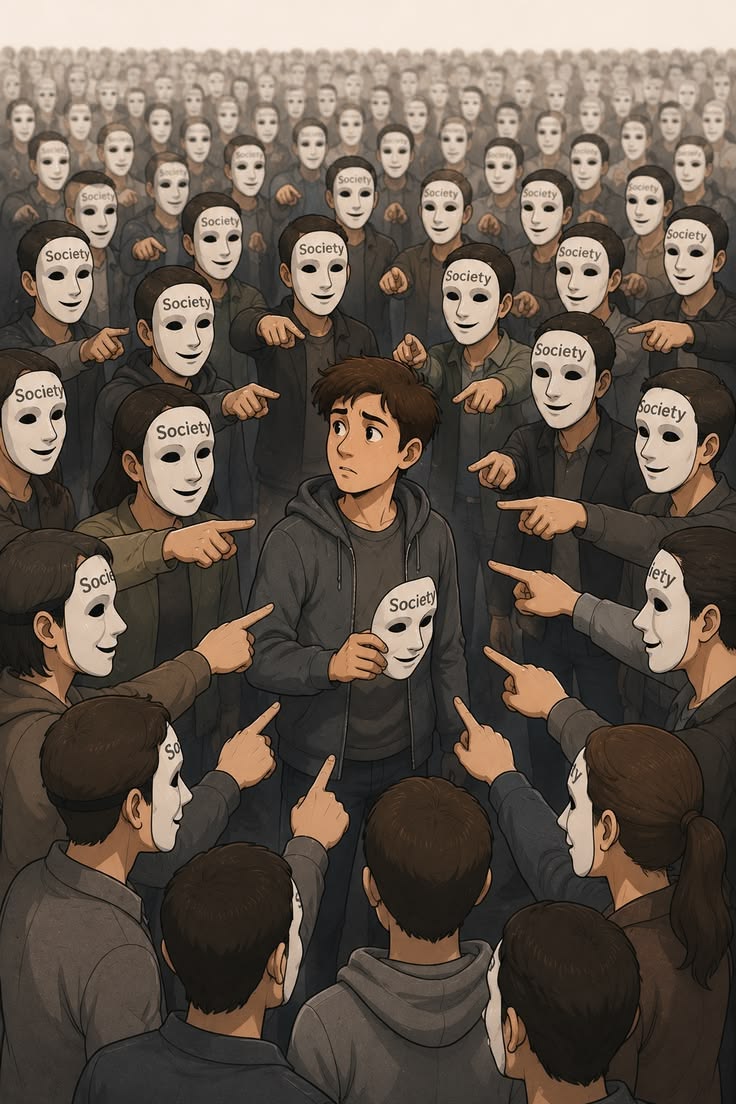
2. Stop comparing your chapter 2 to someone else's chapter 20
Comparison is hard to avoid, especially online. You see someone landing a job, shipping a project or posting a certificate, and it feels like they started the race ahead of you.
This habit is not a personal flaw. In 1954, psychologist Leon Festinger proposed that people evaluate their own abilities by looking at others, particularly when there is no clear objective measure to use. His paper, A Theory of Social Comparison Processes, is one of the foundations of modern social psychology. Learning rarely comes with a clear scoreboard, so we reach for other people's lives as one. The trouble is that those lives are edited highlights, and the person you are comparing against may have started years before you.
A more useful comparison is with your own past.
- Where were you six months ago with this skill?
- What could you not do then that feels ordinary now?
- Which questions confused you back then that you could now answer?
Progress deserves recognition even before the results show up. The job offer, the first client or the finished portfolio usually arrives after a long stretch where nothing looks different from the outside. The change is happening anyway, in how you think and what you can handle.
3. A setback is not a verdict on your future
Everyone has a version of the story where something went wrong and the ending feels written. A course you dropped. An exam you failed. A project that fell apart.
It is easy to turn that event into a label: "I am bad at this" or "I always quit." But a mistake can be a lesson instead of a label. The difference is what you decide it means. A lesson tells you what to change. A label tells you who you are, and it usually isn't accurate.
Your next chapter does not have to look like your last one. That might mean:
- Choosing a smaller starting point, such as twenty minutes a day instead of two hours.
- Switching how you learn, for example building a tiny project rather than only watching lessons.
- Asking for help earlier instead of struggling alone for a week.
Then begin again, and celebrate small wins on the way. Finishing one lesson, fixing one bug or understanding one chart is worth acknowledging. Small wins are what a long journey is actually made of.
Putting the three ideas together
These reminders work as a sequence:
- Record your progress so your memory is not one sided.
- Compare yourself to your past self, not to strangers online.
- Treat setbacks as information and start again without shame.
None of this makes learning easy. It makes it easier to keep going, and keeping going is the thing that separates people who eventually get good at a skill from those who quietly stop.
Your next step
If you have been waiting for the "right time" to start or restart, consider this your sign to begin small. Pick one skill and give it a first twenty minutes this week. CodeDevPay Academy has free, self-paced courses with progress tracking, so you can always see how far you have come, which is exactly what the first reminder asks of you.
Newest free course:
- Database Fundamentals with PostgreSQL: guided lessons and practical activities for anyone who wants to understand how data is stored and organised.
More free courses to start with:
- AI: Responsible AI, AI Creative Studio, AI-Powered Communication, Generative AI Foundations and Mastering Prompt Engineering with ChatGPT
- Programming and web: Python Zero to Hero, JavaScript Mastery and Web Development Foundations
- Design and office skills: Canva 101, Adobe Photoshop Full Course, Microsoft Word and Microsoft Excel
Already know something worth teaching? The Academy's new Creator Studio lets you turn your knowledge into a course. That is one more way to put your progress to work. Not sure how to apply? Watch this creator application walkthrough and follow along step by step.
Keep learning. Keep building.





Comments